Buying a used car starts with a straightforward question: does it suit your journeys and your budget, beyond how it looks? This buying guide helps you compare available vehicles, understand used-car inspection points and plan a worthwhile test drive. The aim is not to find a car described as “risk-free”. It is to gather information you can check before making a decision.
Who is this used car buying guide for?
This guide is for anyone looking for a car for everyday life: commuting, shopping, family trips or longer journeys. It is equally useful if you are buying your first car, replacing one that no longer meets your needs or choosing a vehicle for work. In every case, start with what you will actually use the car for, rather than the category or badge that first catches your eye.
Picture a typical week of driving. Are most journeys short and urban, on country roads, or on motorways? How many people travel with you regularly? Do you need room for a pushchair, tools or luggage? Consider where you park and, if you drive in a city, check any local access rules relevant to the car you have in mind. These questions help you rule out vehicles that would make ordinary trips inconvenient.
Someone who drives infrequently and parks on a narrow street faces different trade-offs from someone who travels long distances with passengers. Powertrain, size, load space and comfort need to be considered together. There is no single “most reliable” model for every driver: the condition and maintenance of the particular car matter alongside its broader reputation.
Before browsing the used-car stock, set a budget that works for your circumstances. Separate the advertised purchase price from the costs of running the car, including insurance, fuel or charging, maintenance and any work you expect to need. If you are trading in your current vehicle, a trade-in assessment can help you plan. It does not replace a close look at the car you intend to buy.
What should you check when choosing an inspected used car?
An inspected car deserves more than a brief claim in an advert: ask what was checked and what preparation was completed before sale. At a car dealership with a workshop, staff can explain the findings and work relating to the specific vehicle you are considering. Do not assume a job has been done simply because it is commonly part of preparation. Ask which tasks were completed and whether anything remains to be addressed.
The vehicle history puts its current condition into context. Review whatever records are available: maintenance invoices, a service book if there is one, dates of work and information provided about repairs. Written evidence can tell you what was done. A missing invoice does not, on its own, prove that no maintenance took place. If part of the history is unclear, ask for an explanation rather than filling the gap with a guess.
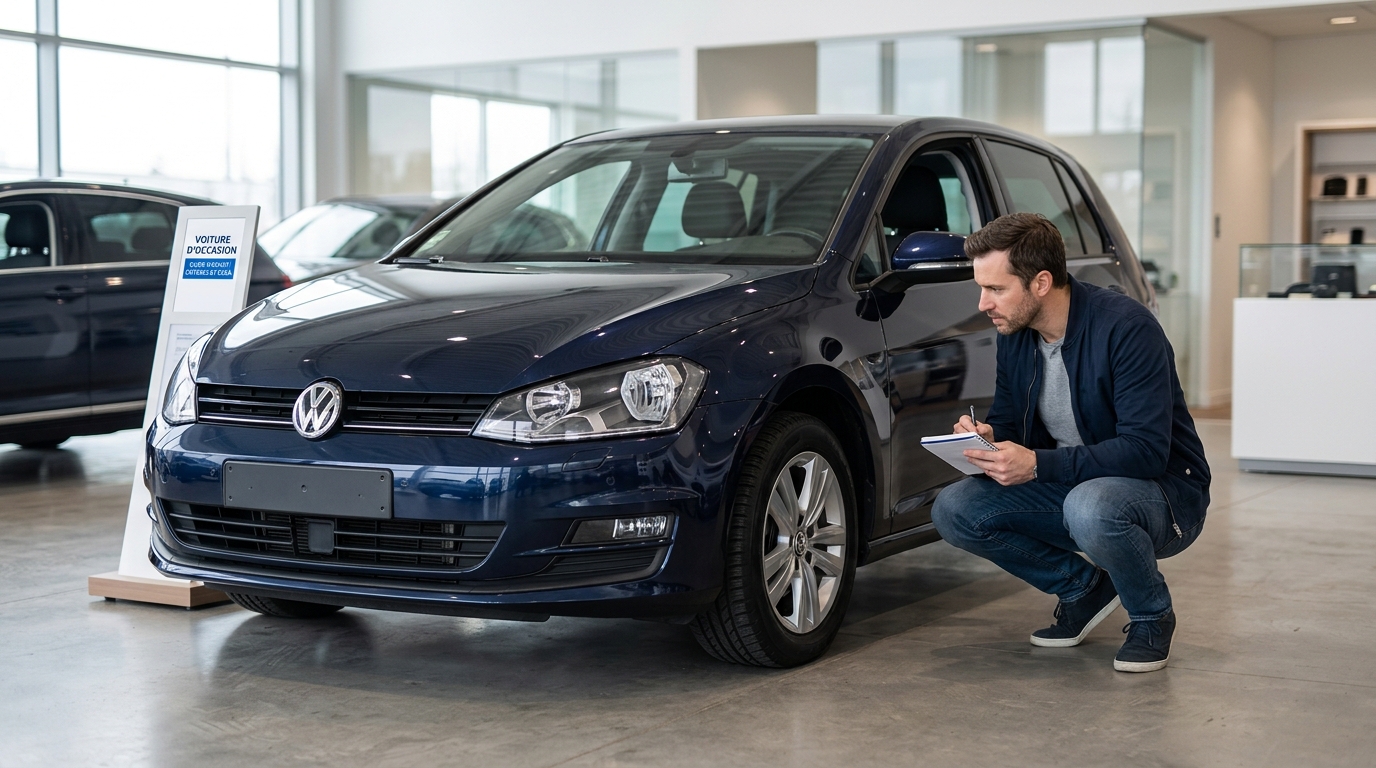
Approach used-car inspection points in groups. Look at tyre condition and wear, braking behaviour, lights, visibility, controls and any warning lights that remain on. Examine the bodywork and interior, but do not mistake a visible mark from normal use for a mechanical diagnosis. The dealership can explain its checks and distinguish what the available records confirm from what they do not.
| What to review | What it may tell you | A useful question to ask |
|---|---|---|
| Available service history | Documented maintenance and known work | “Which invoices or service records can I see?” |
| Pre-sale preparation | Checks and work carried out on this car | “Is any work still planned before handover?” |
| Roadworthiness inspection, where applicable | Findings recorded at the time of that inspection | “Can I read the report and any observations?” |
| Test drive | How the car behaves in real driving conditions | “Can the route reflect the way I drive?” |
| Warranty terms | The stated cover and its limits | “Which document sets out the term and exclusions?” |
A used car’s roadworthiness inspection report is a document to read, not a promise that a future fault is impossible. Check the report date, result and observations, and ask how any recorded issues were dealt with. Depending on the vehicle’s age and the circumstances of sale, the seller must supply the required documents, including roadworthiness inspection paperwork where applicable. This helps you separate an inspection at a particular point in time from maintenance history and pre-sale preparation.
Compare listings using the same criteria. A photograph can show visible condition, but not the full history or how a car drives. A useful listing should be consistent with the documents you can review and the seller’s answers. If information that matters to you is missing—maintenance, the operation of a control or work said to have been completed—ask about it before committing. An answer about the specific car is more useful than a broad assurance about every vehicle on sale.
How can you view, test-drive and buy a used car at the dealership?
Shortlist cars that suit your needs, then book a test drive. Tell the dealership what you want to assess: ease of access, passenger space, visibility, manoeuvrability or comfort on the kinds of roads you use. Say if you would like to compare several cars. An appointment gives you a chance to confirm availability and test-drive arrangements; it does not mean you must decide that the car is right for you.
When you arrive, work through the vehicle listing. Adjust the seat to your usual driving position, check what you can see and, with the seller’s agreement, try the controls you would use every day. Assess the load area with your own belongings in mind, rather than relying only on a stated capacity. If you use a child seat or carry bulky equipment, ask whether you can check how it fits before deciding.
On the test drive, notice how the car starts, steers and brakes, and how it behaves on roads similar to your regular routes. Listen for unfamiliar noises and write down anything you want explained; an impression on its own is not a mechanical diagnosis. Take time to judge the driving position and ease of parking, too. If something concerns you, ask for it to be explained or examined before proceeding.
Afterwards, compare your impressions with the available records: vehicle history, the roadworthiness inspection report where required and details of any work the dealership has described. Ask what documents you will receive at handover and read the warranty terms that apply to the car you have chosen. Consumer protections and any additional commercial warranty depend on the applicable rules and the stated terms; do not assume that an advertised warranty covers every possible repair.
Finally, read the order form before signing. The vehicle identification, displayed price, agreed items and handover arrangements should match what you discussed. If you are considering a trade-in or financing, ask for the terms of the offer relevant to you rather than assuming approval. You can contact the dealership to clarify a document or arrange a visit. A sound decision brings together a car suited to your needs, a useful test drive and consistent information through to handover.